This is the research companion to Ordinary Magic. Read the main post first.
The grit workbook and the toughness camp both assume that resilience is a trait your child either has or can be drilled into. The main post said the opposite. It's the ordinary output of ordinary systems, which makes protecting those systems your actual move in a hard season. Here's what that stands on, and the two boundaries that come with it. Some adversities do overwhelm ordinary systems, and protective factors shift the odds without promising an outcome.
The Spine (research synthesis)
Masten, A. S. (2025). Ordinary Magic: Resilience in Development (2nd ed.). Guilford Press.
ISBN: 978-1462557660
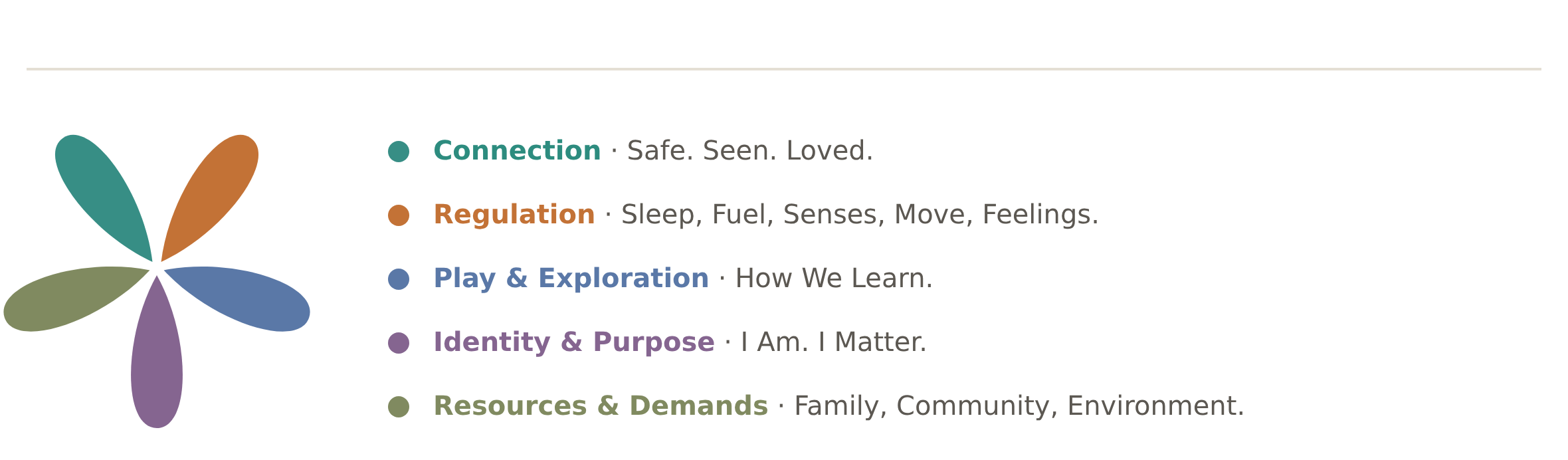
What it says: The field's defining synthesis, updated in 2025. Across five decades of studies, positive adaptation under adversity keeps tracing back to a "short list" of common protective systems: attachment relationships, self-regulation, learning and problem-solving capacity, motivation, hope and meaning, and community supports. Competence in one domain cascades into others; authoritative caregiving (warmth plus structure plus autonomy support) is the most replicated protective pattern; and resilience is a process running through systems, never a fixed trait of the child.
Why this matters for you: This is where the post's whole reframe lives, including its name -- Masten coined "ordinary magic" for exactly this finding. The practical translation is the post's thesis: protect the systems; the adaptation follows.
What it doesn't answer: A synthesis, not a trial; the research base skews Western and higher-income; and the book itself insists on the boundary the post carries -- toxic stress and severe deprivation can overwhelm ordinary systems, and the frame must never minimize adversity's real limits.
The Stakes
Felitti, V. J., Anda, R. F., Nordenberg, D., Williamson, D. F., Spitz, A. M., Edwards, V., Koss, M. P., & Marks, J. S. (1998). Relationship of childhood abuse and household dysfunction to many of the leading causes of death in adults: The Adverse Childhood Experiences (ACE) Study. American Journal of Preventive Medicine, 14(4), 245-258.
DOI: 10.1016/S0749-3797(98)00017-8
What they found: In roughly 17,000 adults, the count of adverse childhood experiences (abuse, neglect, household dysfunction) showed a dose-response relationship with adult outcomes across heart disease, depression, substance use, and early death. Adversity was common, cumulative, and consequential decades later.
Why this matters for you: This is why the resilience question matters at all: childhood adversity's reach into adult health is long and graded. The post's urgency about protecting ordinary systems stands on these stakes.
What it doesn't answer: Retrospective self-report in a single insured population, and a blunt count -- ACE scores capture how many adversities, not their timing, severity, or whether a buffering adult was present. That last gap is exactly what the next two entries address.
The Buffering Definition
Garner, A. S., Shonkoff, J. P., & the AAP Committee (2012). Early childhood adversity, toxic stress, and the role of the pediatrician: Translating developmental science into lifelong health. Pediatrics, 129(1), e224-e231.
DOI: 10.1542/peds.2011-2662
What it says: The American Academy of Pediatrics policy framework that fixed the field's three-tier vocabulary: positive stress (normal, growth-promoting), tolerable stress (serious but buffered), and toxic stress -- defined by prolonged activation of stress systems in the absence of buffering adult relationships, not by the severity of the stressor alone.
Why this matters for you: The definition relocates the hinge from the event to the system around the child. The same hospitalization, divorce, or disaster lands differently depending on whether a stable adult is absorbing shock -- which is the post's "keep the ordinary things running" claim in clinical form.
What it doesn't answer: A position statement synthesizing evidence, not new data; it frames the mechanism rather than quantifying it.
The Protective Side of the Ledger (research synthesis)
Hays-Grudo, J., & Morris, A. S. (2020). Adverse and Protective Childhood Experiences: A Developmental Perspective. American Psychological Association.
ISBN: 978-1433832116
What it says: The synthesis that built the PACEs framework -- protective and compensatory childhood experiences (a reliable adult, routines, belonging, community connection) as the counterweight to ACEs. Its consistent finding: protective experiences buffer adversity when they're embedded in ongoing relationships and environments, not when delivered as isolated add-on interventions.
Why this matters for you: This is the evidence shape behind the post's advice pattern: reinstate the anchor routine, tell the teacher, protect the one relationship. Embedded, boring, and continuous beats special and episodic.
What it doesn't answer: The PACE literature is younger than the ACE literature it mirrors; measurement is still maturing, and most evidence is observational.
The Wear-and-Tear Mechanism
McEwen, B. S. (2007). Physiology and neurobiology of stress and adaptation: Central role of the brain. Physiological Reviews, 87(3), 873-904.
DOI: 10.1152/physrev.00041.2006
What it says: The mechanism review behind "chronic stress costs": stress systems that turn on and off cleanly are adaptive, but chronically activated ones produce cumulative wear -- allostatic load -- with the brain as both the regulator and a primary target of the damage.
Why this matters for you: This is why buffering matters biologically. The protective systems in the short list work in part by keeping a child's stress physiology cycling normally instead of grinding -- the difference between a system that gets exercised and one that gets worn.
What it doesn't answer: A physiology review spanning animal and human evidence, not a child-outcome trial; it explains the plumbing rather than testing an intervention.
Coming Up
Call, don't text. A parent's presence measurably lowers a child's stress hormones -- and the effect travels through voice, not through the text thread. What social buffering is, why it can be working while your kid still looks upset, and what shifts at puberty.
Every Functional Child Development post comes with a Dive Deeper companion. Subscribe to get both, every week.